February 7 — the anniversary of the signing of the Maastricht Treaty
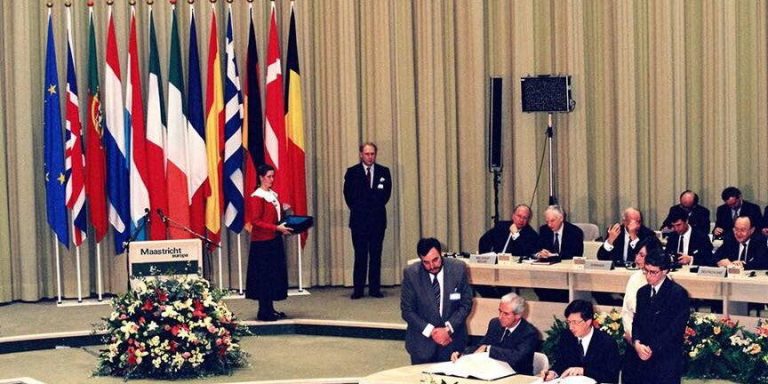
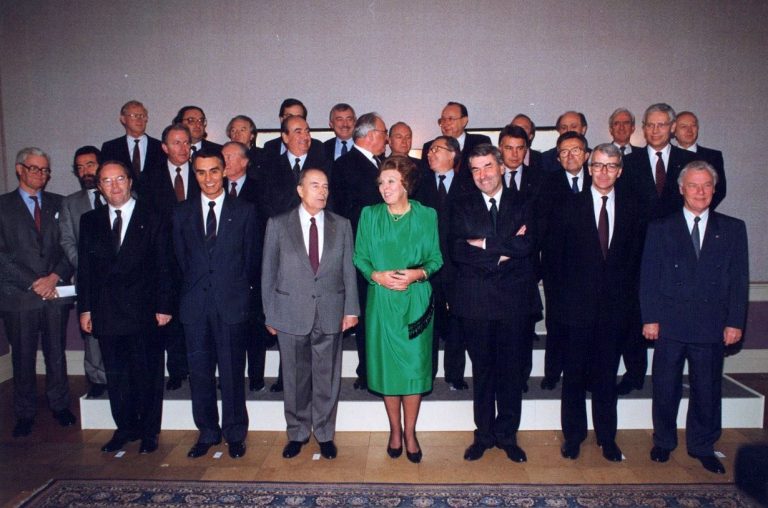
This year marks the 34th anniversary of the signing of the Maastricht Treaty—the agreement that laid the foundation for the modern European Union. And in December 2026, it will be 35 years since the Maastricht Summit (December 9–10, 1991), which served as a key precursor to the treaty. At that time, the leaders of 12 European countries agreed on the outcomes of the intergovernmental conferences and established the principles of the four freedoms of the internal market: the free movement of goods, services, capital, and people.
This is a wonderful opportunity to recall how the modern EU was born and to prepare for the upcoming anniversary!
The document was preceded by the Maastricht Summit (December 9–10, 1991), during which the leaders of 12 European countries reviewed the final recommendations of two intergovernmental conferences on the establishment of the four freedoms of the internal market: the free movement of goods, services, capital, and people.
On February 7, 1992, the Maastricht Treaty was signed, and on November 1, 1993—following ratification by all member states—it entered into force. The document officially established the name “European Union” and defined its key objectives: the creation of an area without internal borders, the formation of an economic and monetary union and the introduction of a common currency, the establishment of European citizenship, the development of a common foreign and security policy, as well as cooperation in the fields of justice and home affairs.
The Maastricht Treaty expanded the use of qualified majority voting, strengthened the role of the European Parliament, and established the office of the European Ombudsman to protect citizens’ rights. At the same time, decisions on foreign policy continued to be made by unanimous consent. The treaty laid the foundation for further EU reforms, including the Treaties of Amsterdam (1997) and Nice (2000), as well as subsequent institutional changes.
It was the provisions of the Maastricht Treaty that laid out the principles underpinning modern European integration, including the requirements for countries seeking to join the EU to adapt their national legislation.