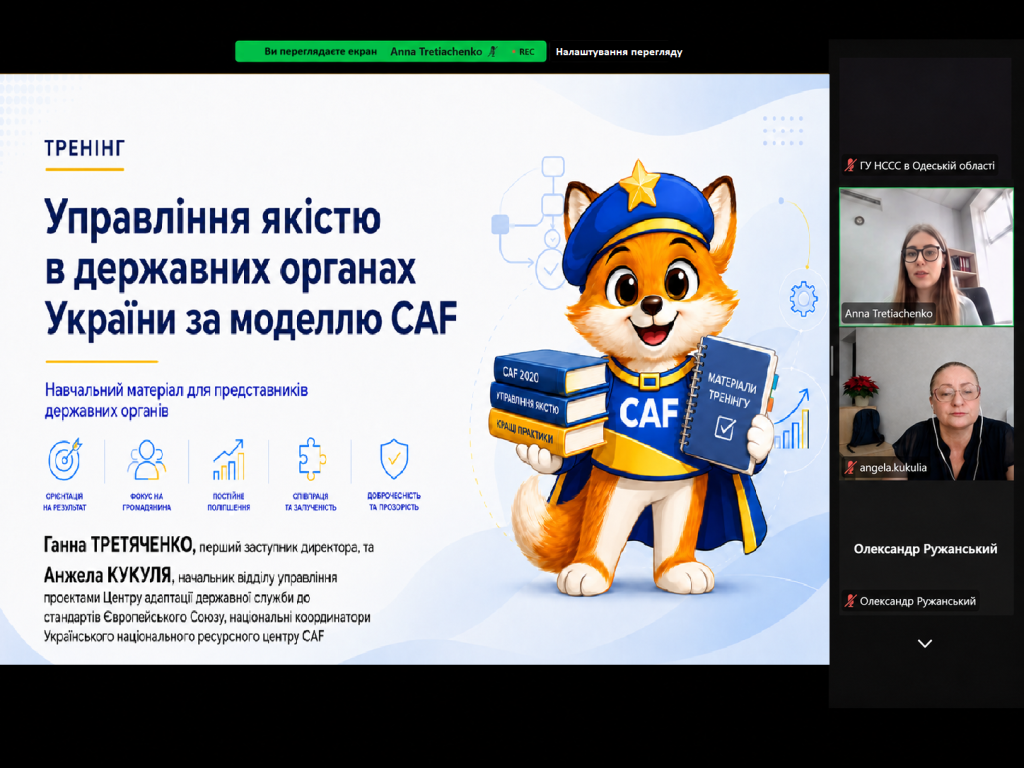
On 31 July 2026, the Center for Adaptation of the Civil Service to the Standards of the European Union, which serves as the Ukrainian National CAF Resource Centre, conducted an online training course under the general short-term professional development programme entitled “Improving the Effectiveness and Quality of Management in Public Administration and Local Self-Government through the Application of the Common Assessment Framework (CAF)”.
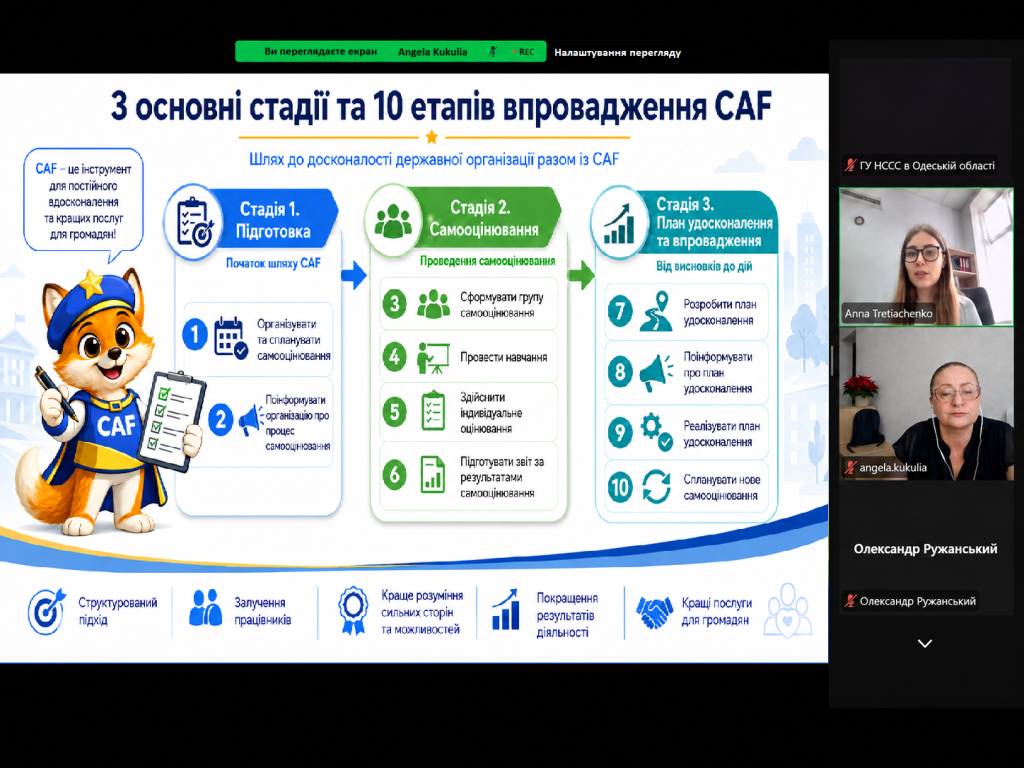
The purpose of the training was to provide participants with a comprehensive understanding of the CAF model, including all stages of its implementation, its objectives and expected results, as well as the application of the CAF External Feedback Procedure.
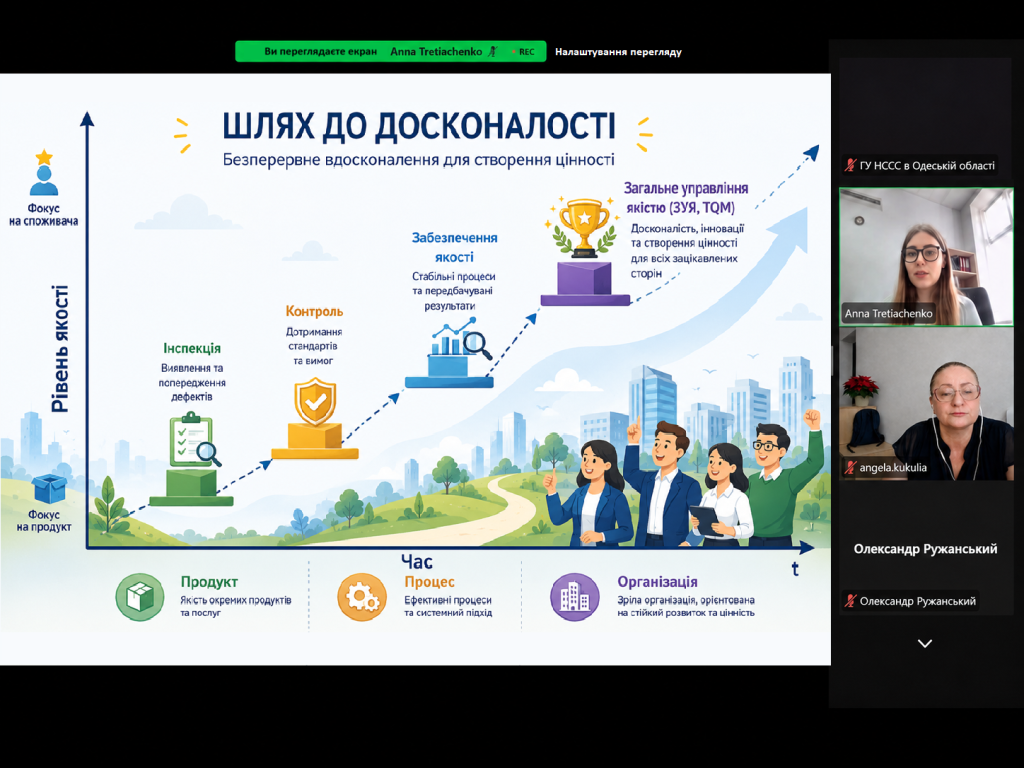
The participants had an opportunity to deepen their understanding of the CAF model and learn more about its components, underlying logic and implementation stages.
Particular attention was paid to conducting a consensus meeting, prioritising improvement actions and understanding the facilitator’s role in these processes. The training also covered the development and implementation of an improvement action plan, the planning of a new self-assessment cycle and participation in the External Feedback Procedure leading to CAF Recognition for Excellence.
The implementation of this programme contributes to the broader application of the CAF model by public authorities and local self-government bodies in Ukraine. It supports the development of organisational capacity, a stronger citizen-oriented approach and the continuous improvement of internal processes.
More than 60 civil servants and local government officials participated in the training.
The trainers were representatives of the Center for Adaptation of the Civil Service to the Standards of the European Union: Hanna Tretiachenko, First Deputy Director, and Angela Kukulia, Head of the Project Management Department, who are national experts of the Ukrainian National CAF Resource Centre.
For reference: The general short-term professional development programme “Improving the Effectiveness and Quality of Management in Public Administration and Local Self-Government through the Application of the Common Assessment Framework (CAF)” was developed and implemented jointly by the Center for Adaptation of the Civil Service to the Standards of the European Union and the High School of Public Governance.
#CAF #QualityManagement #PublicAdministration #OrganisationalDevelopment #ContinuousImprovement #PublicSectorInnovation #CAFUkraine #PublicServiceExcellence